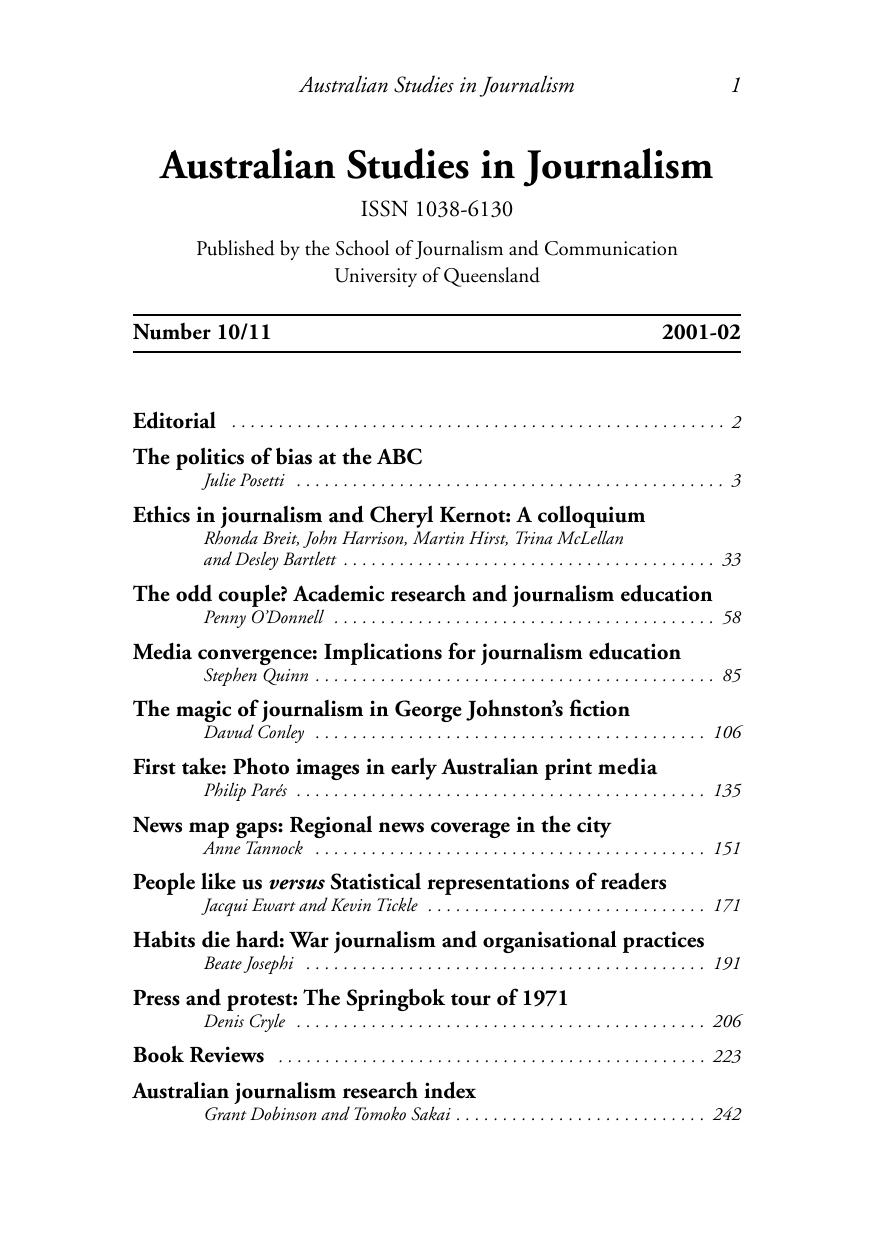
This is Stephen Quinn’s paper “Media convergence: Implications for journalism education,” published in Australian Studies in Journalism, Number 10/11, 2001-02, from the School of Journalism and Communication at the University of Queensland. Quinn was then director of the Center for Media Training and Research at Zayed University in Dubai, and he surveys what was, at the time, the newest idea in the newspaper business: the notion that one reporter’s work should appear in print, on the Web, on radio and television, and eventually on a mobile phone.
The paper takes its starting point from the IFRA/WAN “Beyond the Printed Word” conference in Amsterdam in October 2000 — a gathering of nearly 500 senior newspaper managers from more than 40 countries. I was one of the two conference chairs, which is how I turn up in the text and in the references.
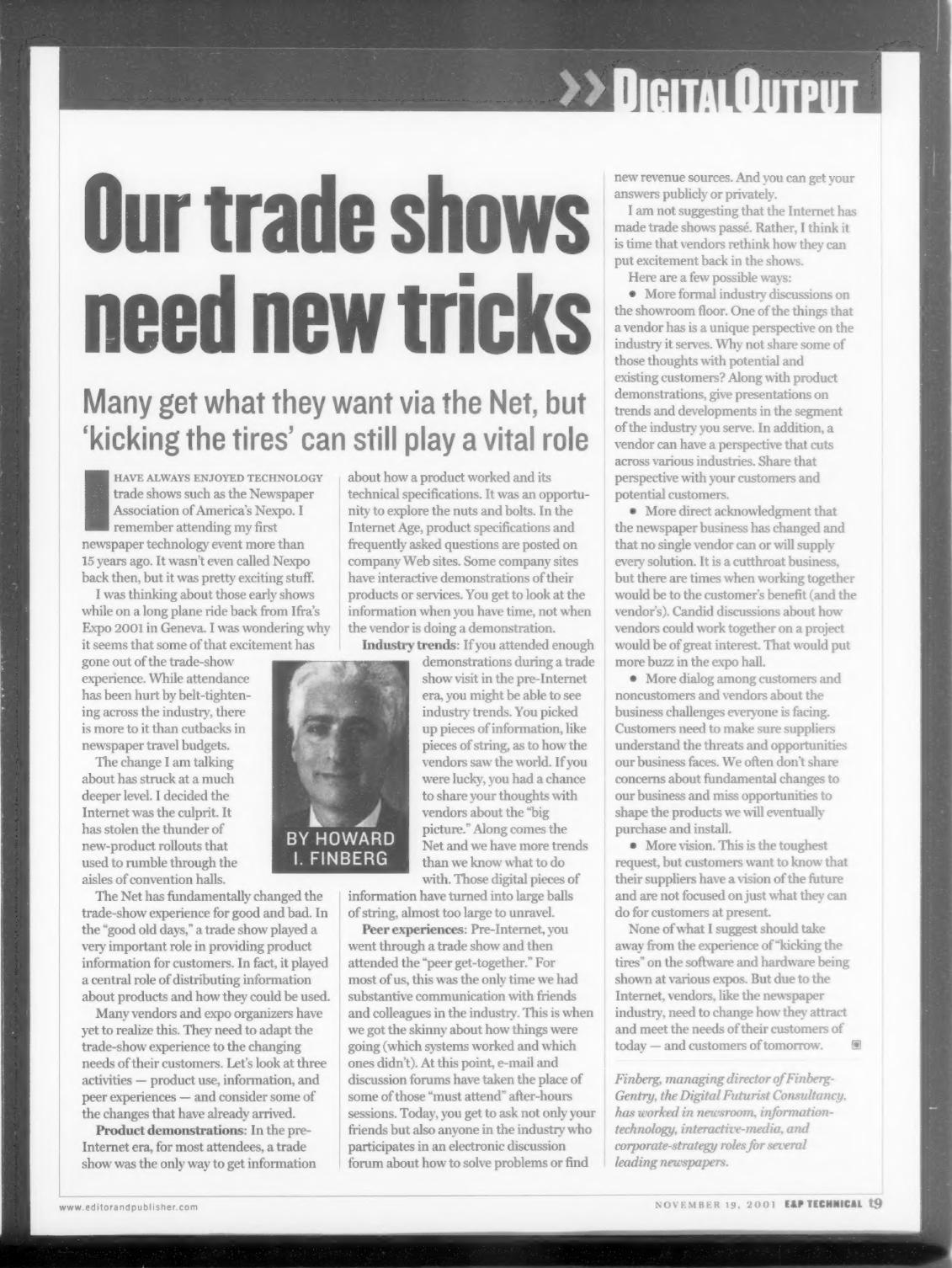
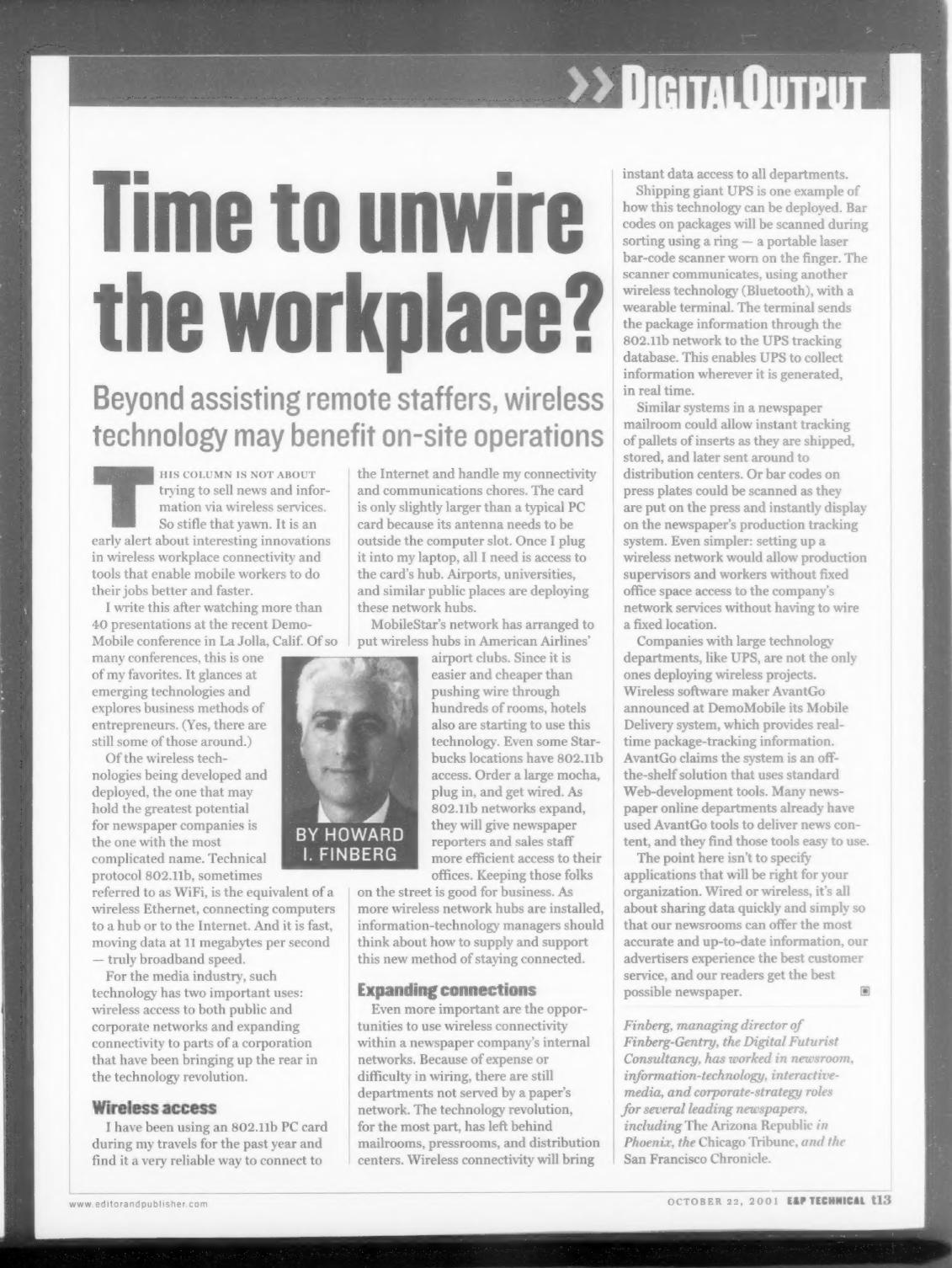
The other conference chairperson, Howard Finberg, pointed out the publishing industry’s strength was its staff, and these people would be “called on more and more in this multimedia, multi-task newsroom” (Finberg 2000).
The bibliography entry is a small pleasure to find in a scanned journal two decades later:
Finberg, Howard (2000), The Digital Futurist Consultancy <www.digitalfuturist.com>. [Finberg’s paper was “Classified: Cannibalism or growth impetus”.]
Much of the paper is case studies: the Tribune Company’s three models of “multiple-journalism” at the Chicago Tribune, the Orlando Sentinel and the Tampa Tribune, as described by IFRA’s Kerry Northrup; the Turun Sanomat operation in Finland; Ming Pao in Hong Kong; Singapore Press Holdings; and the Australian cross-media ownership debate. Quinn also gives space to the skeptics, including Walter Kiechel of the Harvard Business Review, who argued news was far more “medium-specific” than the convergence enthusiasts believed.
The section that has aged best is the one on education. Northrup frames the problem as a chicken-and-egg relationship between the schools and the industry:
“Do you train journalism students for the jobs that exist today so that when they graduate they can be employed? Or do you train people for the skills that they’re going to need in the news organisation tomorrow so that when the newspapers come along and say ‘we need a new generation of journalists’ they have people to pick from?”
And John Pavlik, then executive director of the Center for New Media at Columbia’s Graduate School of Journalism, argues that most American journalism programs were still organized along “early twentieth-century technological lines”:
“Rather than learning to be newspaper, magazine, television, radio or online reporters, they should simply be taught to be journalists working in a digital age” (Pavlik 1998).
Quinn’s conclusion is blunt — “Convergence is inevitable” — and his prescription is training, on the theory that news organizations would have to spend money teaching their own staffs, and that journalists would need to embrace what he calls lifelong learning.
That last point is why I’ve kept this one. The training gap described here is precisely the problem I spent the following decade working on at the Poynter Institute, building News University as a way to deliver journalism training online, affordably, to people who were never going to get to a week-long seminar in Reston or St. Petersburg. The industry’s appetite for paying for that training turned out to be a lot smaller than the industry’s appetite for talking about convergence.
Reading this in 2026, the vocabulary is what dates it. Nobody says “convergence” or “multiple-journalism” anymore, because the argument is over — every newsroom is multi-platform, every reporter shoots video, and the mobile phone Quinn treats as an emerging distribution channel is now the primary one. What did not get settled is the harder question underneath: who pays to teach people the work, and whether journalism schools train for the job that exists or the one that’s coming. Substitute “AI” for “XML” in these pages and the debate reads as current.