Editor & Publisher Notes My Move to the Arizona Republic
Trade-press personnel columns were the LinkedIn of their day. If you changed jobs in the newspaper business, you found out who else in the industry was paying attention by how many notes arrived after your name showed up in Editor & Publisher‘s “Newspeople in the News” roundup.
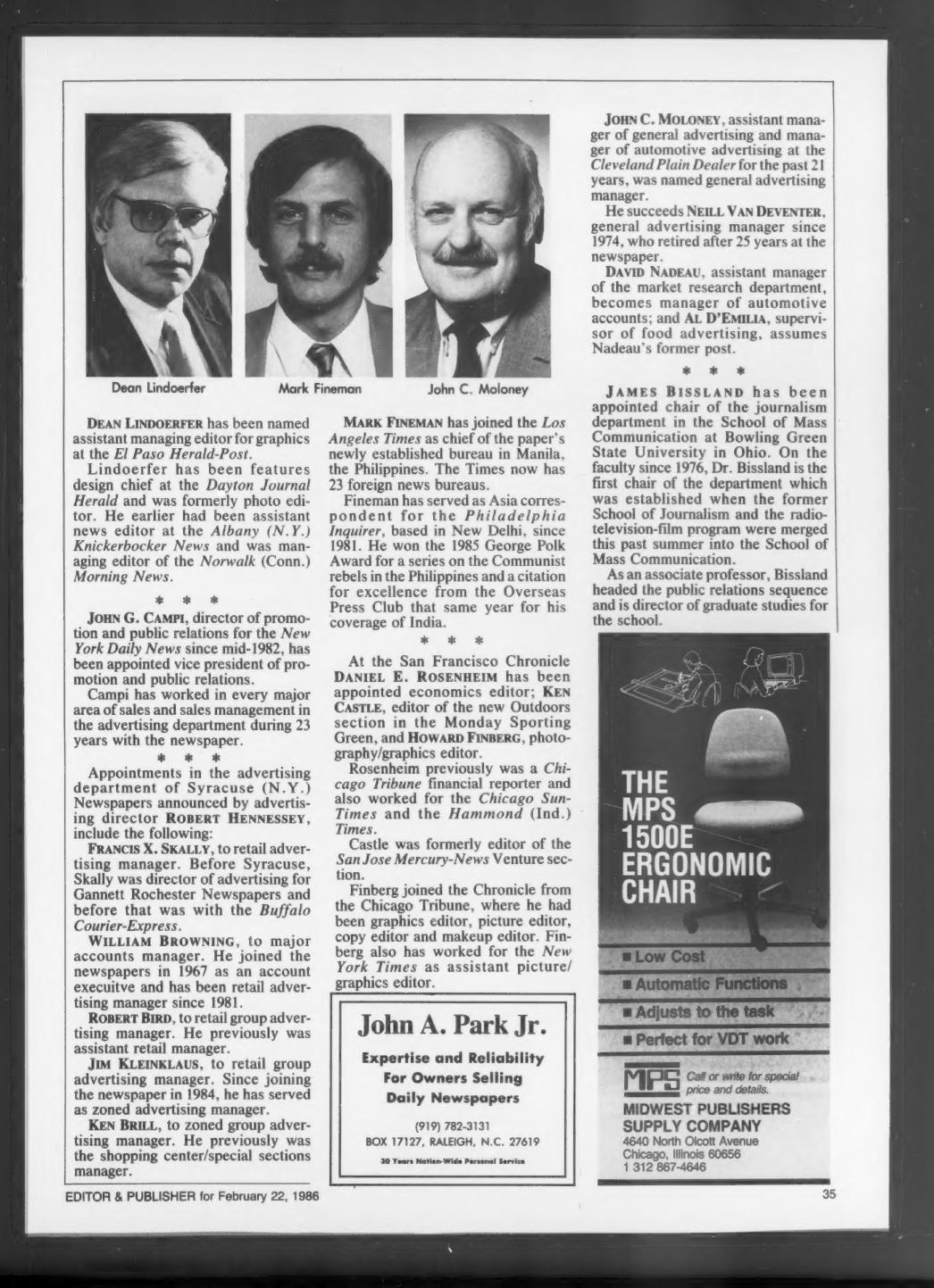
This one, from the Sept. 12, 1987, issue, put me in a column with a Boston Globe diplomatic correspondent, a new publisher for Washington Journalism Review, and the newly elected officers of the West Virginia Press Association. Here’s the item:
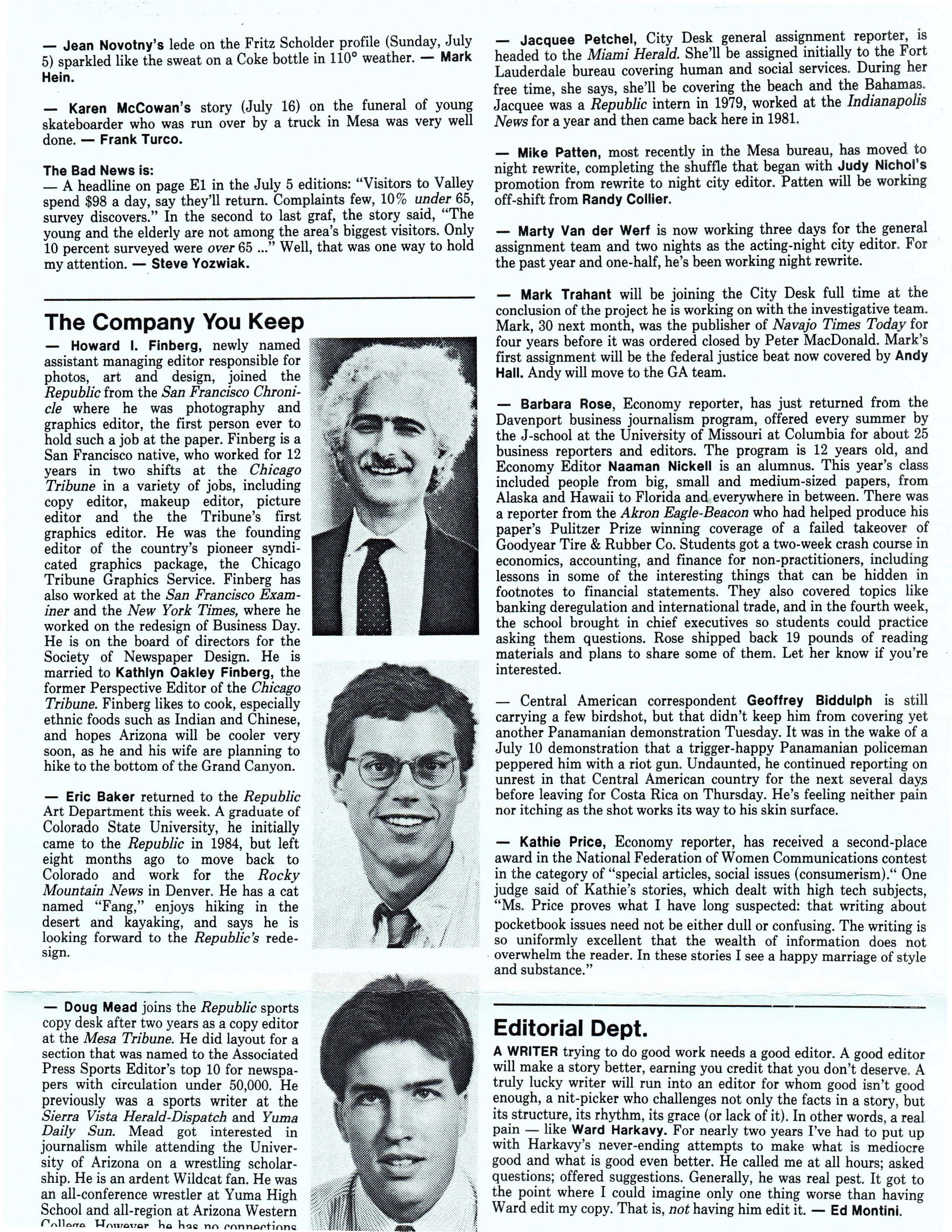
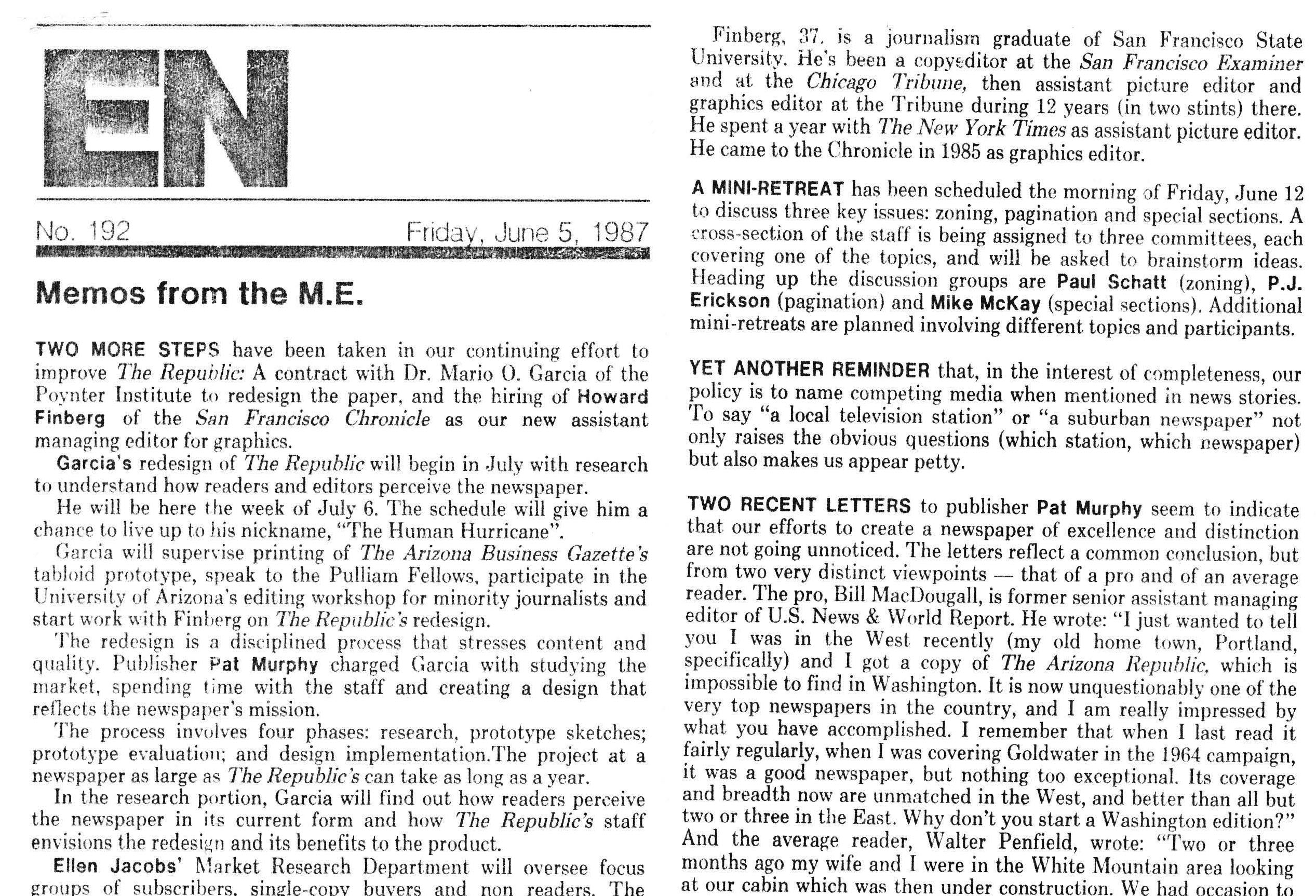
HOWARD I. FINBERG, former photography and graphics editor at the San Francisco Chronicle, has been named to the newly created position of assistant managing editor/graphics at the Arizona Republic, Phoenix.
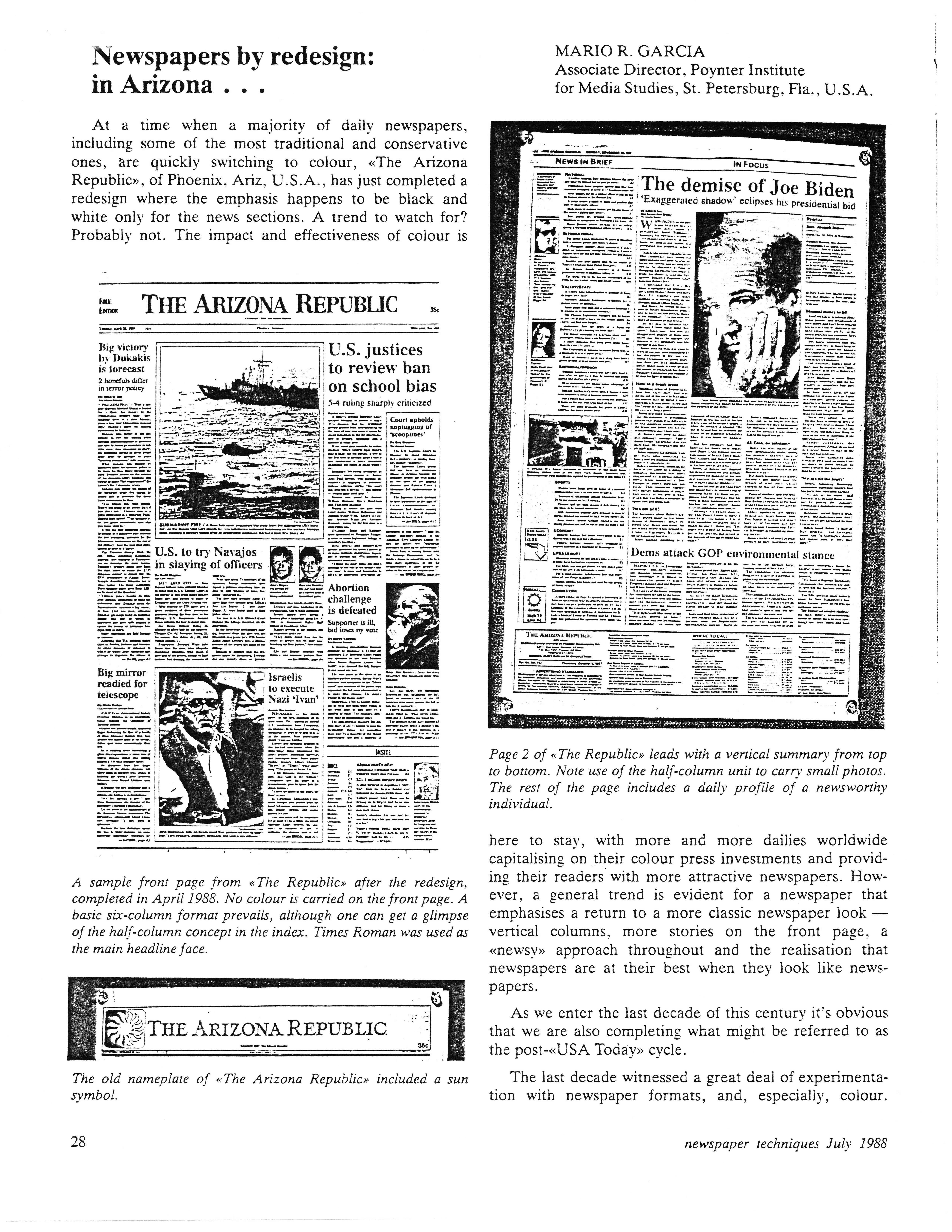
The phrase that matters there is “newly created position.” In 1987, an AME for graphics was still a job a newspaper had to decide it wanted before it could fill it. The Republic had made that decision as part of a larger commitment to redesign — the paper’s internal newsletter had announced my hiring alongside the contract with Mario Garcia earlier that summer.
The rest of the item is a compressed version of the résumé that got me there — a reminder of how much of my early career was spent moving between the copy desk, the picture desk, and the art department, which was precisely the combination the graphics-editor job required:
Before joining the San Francisco paper, Finberg was with the Chicago Tribune as a copy editor, makeup editor, and graphics and picture editor, and was a supervising editor of the Graphics Service.
He also has served as art director at the San Jose Mercury News, assistant picture editor/graphics editor at the New York Times, and copy and makeup editor at the San Francisco Examiner.
I was an editor who worked with artists and photographers, not an artist myself — a distinction I’d been explaining since the Tribune days. By 1987, enough newspapers had come around to the idea that it no longer needed much explaining.