About This Site
Why
I spent more than 45 years in newspapers, media technology and journalism education and training. Along the way, that career left behind a lot of paper — memos, presentations, photographs, front pages, agendas, PDFs — most of it never meant for anyone outside the company it was written for.
Most companies don’t really care about their history. The newspaper industry really doesn’t care about learning from its past. Most journalists don’t understand where their traditions were born or why.
This site exists to save this history. I have decided to scan and post these documents in the hopes they will be useful in the future. Perhaps historians would find them helpful; or perhaps they’re just a curiosity. I put the documents in some kind of order: by year, by employer, by subject. Read together, it becomes something more than a stack of old documents — a working record of how one industry moved, often reluctantly, from analog to digital, told from inside the newsrooms and organizations that lived through it.
It’s part archive, part research project, and — I won’t pretend otherwise — part hobby. An “ego-based project,” as I’ve called it elsewhere on this site. But I think it has real value beyond me: for journalism historians, for people who teach this history, and for anyone curious about how a slow industry adapted to fast technology.
For me, this is my legacy that I leave to others who love the news industry.
How
Getting hundreds of documents out of file boxes and onto this site, with real dates, tags and context for each one, is a lot of work for one person. I started by getting some college students to scan the documents into PDFs. I then would write a post, pull out an image, upload the document, etc. in WordPress. The original site was put together with the assistance of Casey Frechette, a former colleague at The Poynter Institute. Casey later became the chair of the University of South Florida’s Journalism Department. He is also a talented programmer. He created the original “Analog to Digital Timeline”.
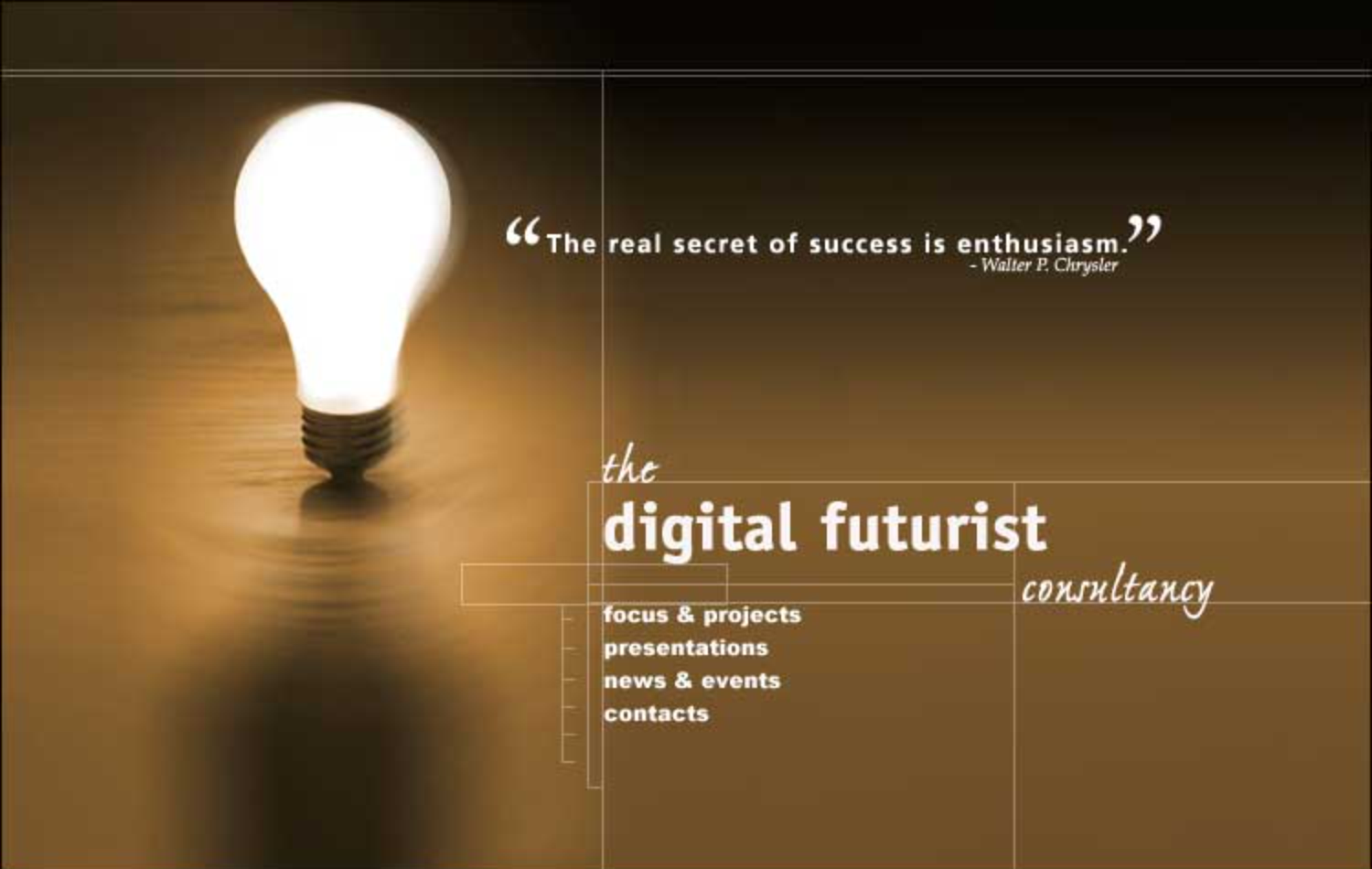
I registered the domain in July 2000 — almost exactly a month after Gannett announced it was buying Central Newspapers, Inc., where I worked at the time. I guess I was getting prepared for the future.
The original Digital Futurist Consultancy website (the brochure site, pre-blog) was live by April 2, 2001. It was created during the period I was a consultant and remained in that format until its first major redesign. The timeline was born with the launch of the new site design on September 17, 2019.
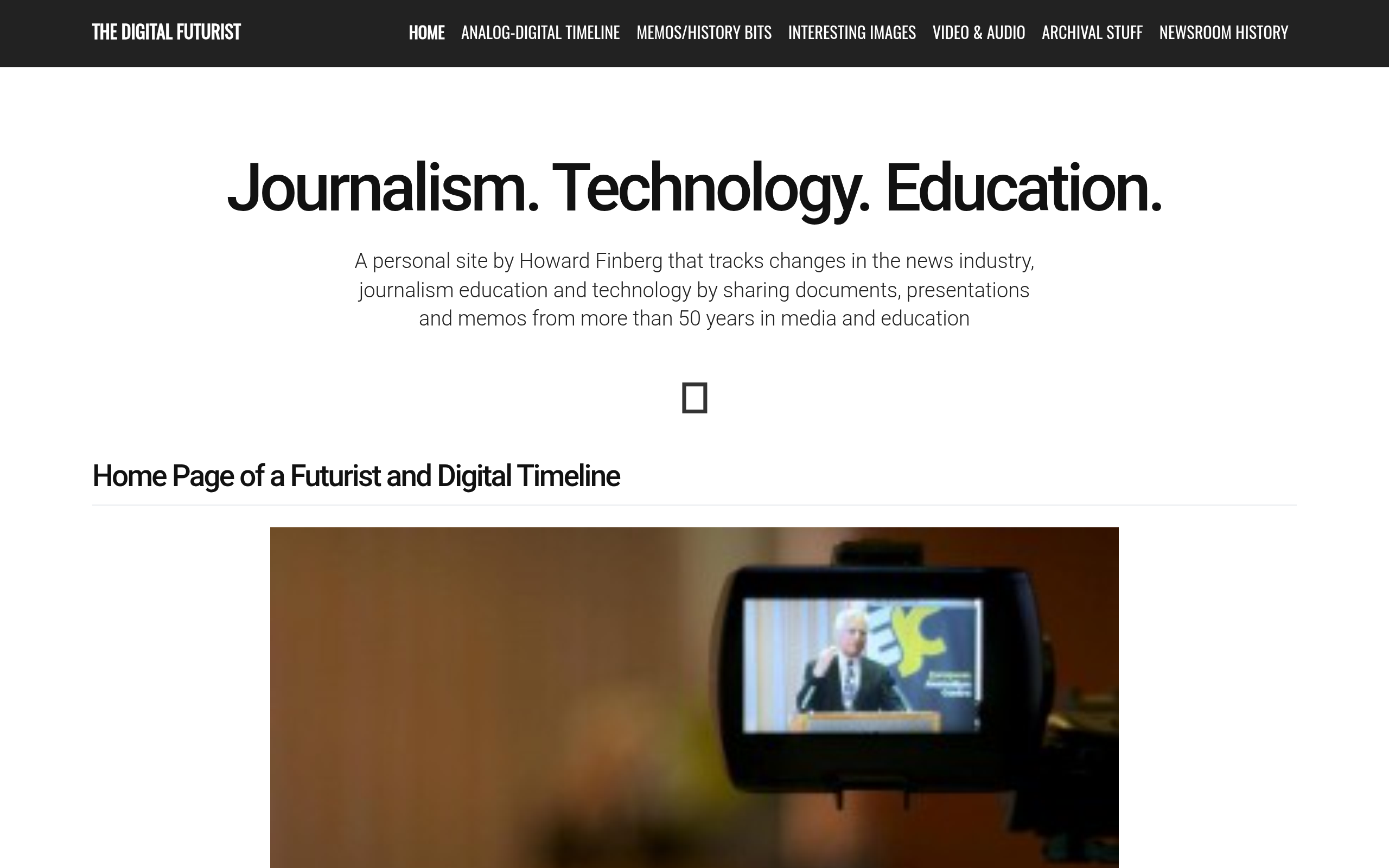
In 2026, in the age of artificial intelligence, Casey and I were on a Google Meet video chat when he shared how he was using Anthropic’s Claude to redesign the home of digitalfuturist.com as a test of capabilities. I was so impressed, so amazed that I quickly started a total redesign of the site with the assistance of Claude Code, beginning July 21, 2026.
As the redesign neared completion, I wondered whether Claude Code would help with the posting of more documents. Could Claude help speed the process but still give me editorial control? So I built a tool: the Digital Futurist Content Agent, or DFCA, to find out. It did — and after a month of testing, tweaking and adding new features, the agent is a silent partner in the process.
Here’s how it works. I scan a document and drop it into the DFCA. It reads the text (OCR), then drafts a first version of the post — in my voice, aware of previously written posts and grounded in the actual document — along with a suggested date, tags and where it fits on the site.
I read every draft, edit it or rewrite it, and finalize it myself before it goes anywhere. Even after that, it lands in WordPress as a draft, not a published post — I still publish everything by hand, one document at a time. Nothing on this site is written by artificial intelligence and unread by me.
That’s what the “AI-Assisted, Human-Edited” tag means on some entries here: Artificial intelligence helped get a first draft onto the page quickly, based on a real document I provided — but every word that’s published, I’ve reviewed and stand behind.
The DFCA also takes out some of the “grunt work” by suggesting dates and tags and even which page the post lives on. It is a helper, not an author.
Some “purist” would argue this is the wrong approach — I should write everything. However, given what I’m doing, Claude sometimes does a better job of pulling out key points and quotes than I do. Plus, given my aging, arthritic hands, the DFCA never gets tired of typing.
My real goal is to get the documents posted and saved for the future, even after I have left this earth. That is part of my legacy.
–Howard I. Finberg
September 3, 2026