Arizona Central Opens for Online Business
On Sunday, November 26, 1995, The Arizona Republic told its readers that Phoenix Newspapers Inc. had gone online. The story, by staff writer David Hoye, ran on page one under the headline “PNI opens ramp to information highway,” with a full page inside devoted to explaining what Arizona Central was and how to get to it.
There were two front doors. One was on America Online — at the time, by the paper’s own description, the largest commercial online service on Earth, with 4 million customers, “bigger than CompuServe and Prodigy combined.” The other was on the World Wide Web.
On America Online, type keyword: arizona central
On the Web, http://www.azcentral.com/
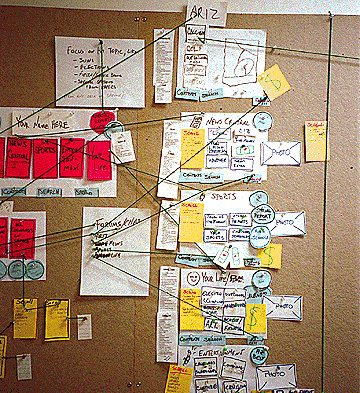
The AOL service opened with a set of buttons that would look familiar to anyone who has built a home page since: News/Money, Sports, Destinations, Your Life, At Ease, Sound Off, ALT. and What’s Hot. Sound Off held the columnists, editorials, letters and Steve Benson‘s editorial cartoons. ALT. was aimed at young adults and carried stories written by local students. Elsewhere there were Penelope Corcoran’s restaurant reviews under Taste the Town, interactive TV grids customized to your cable company, a searchable golf-course database, the Pick the Pros contest, a GiftLine for holiday shopping, and a survey button asking readers what they wanted from an online service.
The ambition was larger than shoveling the newspapers onto a screen. As the story put it, Phoenix Newspapers planned “to create nothing less than an online community, where users can learn, communicate, buy and sell and have fun.” The Oasis, Arizona Central’s chat room, was already doing that work — Charles Barkley had spent more than an hour there the week before, taking questions about the 1995-96 Suns season.
John Oppedahl, executive editor of the newspapers, framed it this way:
“Our new effort online is a significant move forward for Phoenix Newspapers Inc.,” said John Oppedahl, executive editor of the newspapers. “I look at this as the beginning of a new era.”
I was quoted as well, in my role at the time:
“It’s instant journalism,” said Howard Finberg, Phoenix Newspapers’ senior editor of information technology. “It’s pretty exciting.”
Worth noting where the launch story sat on that Sunday front page. It shared A1 with a package called “FUTURE ON THE LINE: REWIRING THE VALLEY” — about Congress and state regulators opening the telephone market to competition, cable companies becoming phone companies, and the promise of 500 television channels and video calls over the Internet. The newspaper was covering the coming of the network and joining it on the same day.
The story also made the case to advertisers, with a comparison that has aged into a period piece: online was “the most important new communications medium since Johann Gutenberg‘s experiments with movable type more than 500 years ago.”